Higher efficacy platforms
Continue improving fixture families so growers can meet canopy targets with fewer wasted watts and less avoidable heat.
Sustainability roadmap
Mars Hydro approaches sustainability through fixture efficacy, smart dimming, serviceable parts, lower-waste packaging, and support that helps growers avoid over-lighting. In controlled-environment agriculture, the environmental impact of lighting is not limited to the fixture on day one. It includes electrical load, cooling demand, fixture life, driver replacement, room scheduling, and the confidence operators have when they set intensity.
Continue improving fixture families so growers can meet canopy targets with fewer wasted watts and less avoidable heat.
Expand controller workflows that encourage stage-based dimming, room grouping, and schedules aligned with real crop need.
Make replacement drivers, accessories, and support references easier to identify so viable fixtures remain in service longer.
Refine protective packaging with more recyclable materials and tighter packing logic for high-volume fixture shipments.
Promote PPFD and DLI conversations that reduce over-lighting and help growers document energy decisions more clearly.
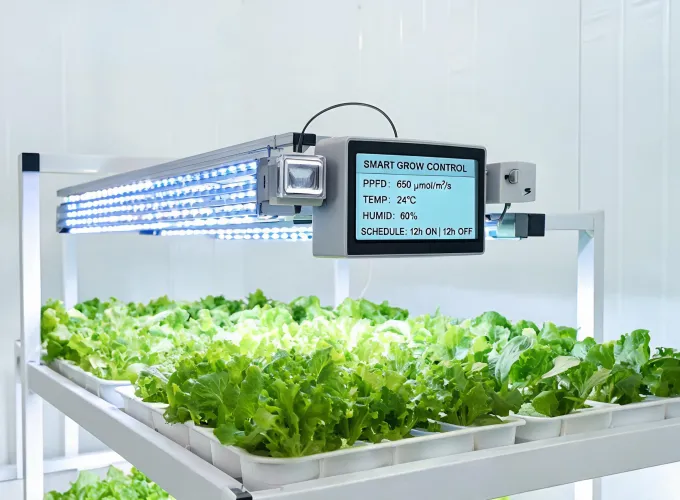
Efficiency matters because every extra watt can become both an energy cost and a cooling burden. Mars Hydro fixture development focuses on diode performance, heat dissipation, driver stability, and practical output distribution. Smart controllers and PPFD sensors add another layer: they help growers match intensity to crop stage instead of running fixtures at maximum output by habit.
Serviceability also affects sustainability. When replacement drivers, hangers, sensors, and documentation are easy to identify, teams can maintain equipment instead of replacing entire systems prematurely. This is especially important for commercial sites where a fixture decision may be repeated across hundreds of units. Mars Hydro encourages maintenance planning as part of the original lighting discussion.
Provide crop targets, room constraints, and operating feedback so lighting recommendations can be practical and measurable.
Protect mounting quality, cable routing, service access, and controller organization during deployment.
Keep documentation, spare parts, and troubleshooting paths available for long-term fixture use.
Use field feedback to improve fixture families, control workflows, packaging, and serviceability.
Tell us your target PPFD, crop cycle, and utility constraints. We will help shape a lighting approach that avoids waste while protecting yield goals.