Layout guidance
We translate canopy dimensions, crop goals, and mounting constraints into fixture positioning and preliminary count ranges.
Project services
Mars Hydro supports growers before the purchase order, during fixture deployment, and after the first harvest cycle. Our service model starts with the crop and the canopy: room size, bench spacing, crop stage, desired PPFD, photoperiod, mounting limits, HVAC capacity, and control expectations. From that information we recommend fixture families, estimate counts, define dimming ranges, map control zones, and identify accessories such as iConnect controllers, PPFD sensors, hangers, and replacement drivers.
For compact indoor rooms, the service discussion often centers on TS and TSW fixtures, simplified mounting, and practical dimming schedules. For commercial grow rooms and greenhouse bays, the work expands into aisle access, bar fixture spacing, seasonal supplementation, service part planning, and standard operating settings for multiple teams. Each recommendation is written so operators can understand the why, not just the model number.
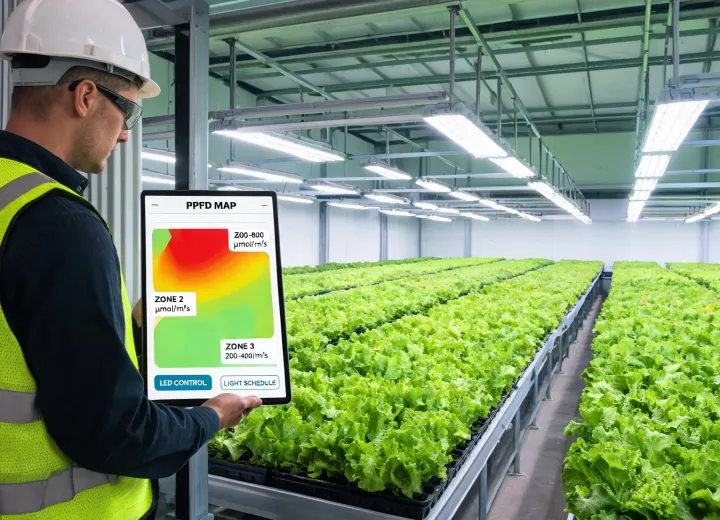
We translate canopy dimensions, crop goals, and mounting constraints into fixture positioning and preliminary count ranges.
We recommend intensity ranges and stage-based dimming practices that fit vegetative, flowering, propagation, or leafy greens programs.
iConnect controller grouping, schedule logic, sensor placement, and room naming are planned so staff can operate lighting consistently.
Replacement drivers, shipping coordination, documentation, and troubleshooting paths help teams keep rooms productive after installation.

A greenhouse operator may need more than fixture brightness. The service plan reviews seasonal daylight, crop bench layout, target DLI, row spacing, and control grouping. Mars Hydro helps identify where supplemental light adds value, how dimming should respond to natural light, and how operators can avoid over-lighting during bright periods. The result is a practical configuration that balances plant response and energy discipline.
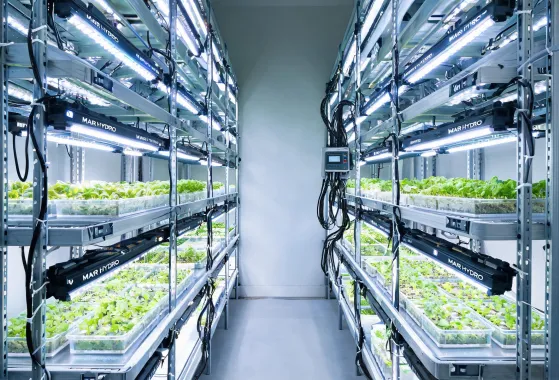
Stacked growing environments need repeatability from shelf to shelf. We review rack height, crop distance, airflow, electrical access, and service clearance before recommending fixture spacing and sensor positions. The goal is to help operators create a repeatable module that can be copied across aisles without introducing inconsistent PPFD, heat pockets, or confusing controller labels.
We will help narrow fixture series, coverage, controls, and support requirements before you commit to a lighting layout.